Can I Give My Cat Beef
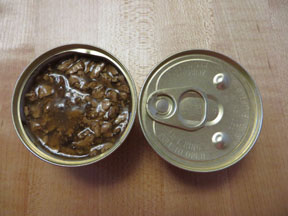
Photo past VIN
I am certain just about a few things in life, but this I know: The dominicus will ascension tomorrow; the Pope is Catholic; and during almost every single encounter I have with clients with cats, I volition talk about feline diet and foods.
The question of how and what to feed cats has been a passion of mine for the concluding xx-plus years. Over that time, like most veterinarians, I have seen a marked increase in obese cats. As a cat specialist with an involvement in intestinal diseases, I as well see more than than my fair share of chronically vomiting cats. You might say that much of my career has been dedicated to saving deep-piled rug from a relentless onslaught of digested cat nutrient and human bare feet from stepping on cold, slime-encased hairballs kickoff thing in the morning time.
What practise chronic vomiting and hairballs have to exercise with food?
From my perspective, quite a bit.
The story of cat nutrition actually starts virtually 100,000 years ago, give or take xxx,000, in the form of the Middle Eastern wildcat. Traipsing the deserts of what is now Israel and Saudi arabia and points in-between, this ancestor of our domestic cats met protein requirements by eating small, furry things that could run fast (but non fast enough); feathered creatures; and lizards. Note that beef and fish were nowhere to exist found. With water in brusk supply and oases few and far between, the wildcat counted on quenching his thirst with the moisture found in his prey's muscles and innards. With no amber waves of grain in sight, the wildcat got by eating the carbohydrates - grains and a few grasses, perhaps - that were contained in the stomachs or crops of his victims. If somehow you were able to put the prey species in a blender, puree them (not a pleasant thought, I know) and measure the carbohydrate content of those critters, it would be somewhere between ii and 12 percent. Cats adult every bit low carb, just not no carb, eaters.
The exception to the higher up were those cats who accompanied the Romans, Phoenicians, and other sea-faring folks on their pillaging journeys to afar shores, and who probably DID eat fish. Otherwise, cats throughout millennia ate a diet of moist rodents, rabbits, birds, and the occasional lizard. It actually wasn't until World War Ii that dry out true cat foods became the norm in u.s., due to the rationing of metal for non-essential items, which included canned pet foods.
With metal rationing, the die had been cast, and then to speak for true cat foods. In the postal service-state of war globe, as Mom, Dad, Sis and Junior saturday down to enjoy their uber-modern Television receiver dinners, Fluffy or Tiger munched away on a cereal of mostly corn, soy and wheat gluten, with a flake of animal fat and maybe some chicken repast added in for expert measure. Information technology seems like a fell culinary trick foisted on an apex predator.
Old habits die hard. So when I inquire near what clients are feeding their kitties, information technology'southward the rare homo who isn't giving a dry diet. When I ask well-nigh canned foods, I'g usually met with horrified looks and am informed that such foods are "also rich" for cats or the canned nutrient will cause dental disease; both of which are simulated. Some clients are honest and admit that it's easier to make full a bowl a few times a week than pop open a tin twice a mean solar day.
My responses to this information vary, depending on the client and the situation, but residual bodacious I am typically kind and persistent. I usually begin past giving a cursory history of those primordial desert cats and their "natural" nutrition, making the indicate that cats most likely do best when they are eating lower on the carbohydrate chain. I don't think feeding cats the dietary equivalent of puffed corn cereal day in and mean solar day out was what Mother Nature ever intended. We all know that it'due south not squeamish to fool our good Mother.
I then segue into my thoughts on what canned poly peptide, ever in the class a diet formulated and balanced for cats, to feed. My recommendations are based on a report, conducted in the 1990s in New Zealand, that involved client-owned cats who presented with vomiting, diarrhea, and/or itching. The cats were anesthetized, had endoscopes (tubes that enter the oral cavity and permit observation of the within lining of the intestinal tract) placed, and purified proteins and carbohydrates were dropped onto the tum linings. The researchers watched for redness, which they used as a marker for inflammation. That piece of work showed that the foods that acquired the well-nigh inflammation - merely non in every cat - were beef, lamb, seafood, corn and soy.
Why that? Beefiness is a large bruiser of a poly peptide and the allowed system typically doesn't like big proteins. Lamb looks a whole lot like beef to the immune system, then it doesn't much intendance for lamb either. When fish sits (try to say that five times, fast) prior to processing, it can build upward high levels of histamine, and histamine, in plow, typically goes hand in manus with inflammation. So mayhap, beef, lamb, and seafood aren't the best choices for most cats. But sayin'.
What so to feed? My preference is to feed cats a poultry (craven, duck or turkey) canned food that is low in carbohydrates. I similar my feline patients and my own clowder to eat diets with less than seven percent carbohydrates, and there's a nifty listing of canned foods at CatInfo with the percentages of fat, protein and carbs available. If you can observe a U.S.-sourced rabbit-based diet, that might be a good option besides.
But a give-and-take to the wise: Cats must eat well every day. Every twenty-four hours. Existence cats, they can and will starve themselves when they're faced with a food they don't like. If you decide to switch to another blazon of food and your true cat decides she isn't going to get along with your chiliad experiment, you've got to wave the white flag, give Puss what she wants and try once more at a subsequently engagement. Only don't give up.
What practise I think are the benefits of feeding a canned, low-carb poultry or rabbit-based diet to cats? My short list is:
- Cats with itchy ears often have underlying nutrient allergies, many times to fish (in my clinical experience). I've stopped counting how many cats aren't scratching their ears anymore after a nutrition switcheroo. It'southward a small modify that often works wonders.
- Hairballs often are a thing of the by with what might be called a more than species-appropriate diet. If your sixteen-year-old kitty has had been vomiting hairballs twice a week for the past 14 years, no dietary change is going to go to the root of the problem. Be smart and go your kitty to a veterinarian for appropriate diagnostics and treatment. Along these lines, forget petroleum jelly and other hairball "remedies." Hairballs aren't due to a grease deficiency; they are due to underlying abdominal inflammation. Hairballs are not normal in cats. Trust me on that i.
- Less tubbiness. Cats seem to lose weight and maintain a heathy one when yous feed a lower carbohydrate canned nutrition. However, but like their human counterparts, obesity in cats typically has a uncomplicated crusade: Besides many calories in and not enough energy expended. Obese cats are at risk for diabetes, as well as increased articulation problems. And so if you think you'll enjoy the price of insulin, needles and twice daily insulin injections, no demand to piece of work with your veterinary and implement a weight loss program for Kitty. But, if like most folks, y'all would prefer to prevent obesity and potentially contrivance the bullet of diabetes for your cat, feeding a more advisable diet is a good thing to practice.
- Meliorate urinary tract health. Years agone, when I started to talk the canned food mantra in my own feline exercise, I noticed a dramatic decrease in urethral obstructions in male cat patients. I'1000 non the merely veterinarian to have recognized this. Feeding canned nutrient and adding a little chip of low-sodium chicken broth or h2o to the food might be all the deviation it takes to continue kitty urinating normally and out of the emergency room.
Like most everything in medicine, non every recommendation works for every patient. Some cats tin can't be switched from a dry food nutrition to a canned one, and yet others would rather starve than surrender their salmon-tuna pate. Like I tell each of my clients, I can but recommend what I believe is the all-time course of activity; you know your cat better than I ever will.
But if I had to tweak one thing in your cat's habits that might brand a big difference in quality and quantity of life, I'd choose food outset. No doubt nearly information technology.
43 Comments
Teri Ann Oursler, DVM
December 30, 2021
Pam Frasca
Dec 30, 2021
Ritesh Rishi
September 23, 2021
Wanda Alston
June 6, 2020
Lena
February ten, 2020
Jen Collins
January 2, 2020
David Gavin
October 29, 2019
Twinnie
July eleven, 2019
Valerie Erwood
April 17, 2019
Teri Ann Oursler, DVM; Christy Corp-Minamiji, DVM
June 23, 2017
Kindred Kai
June 22, 2017
Rachel g
March five, 2017
Martine Graham
January 22, 2017
Leslie Goodwin
Dec 28, 2016
Sian
July 2, 2016
tere
June 26, 2016
Rita from New York
April five, 2016
Smittenkitten
March 5, 2016
Christy Corp-Minamiji, DVM
Feb 4, 2016
Melissa Thornton
Feb 4, 2016
Rita Sullivan
Jan 12, 2016
Christy Corp-Minamiji, DVM
December 28, 2015
Dott
Dec 25, 2015
Chris
December 13, 2015
Mel
Nov 9, 2015
Diane T.
October 23, 2015
Teri Ann Oursler, DVM
August 12, 2015
Cilla
August 11, 2015
Luanne
June seven, 2015
Christy Corp-Minamiji, DVM
March 26, 2015
Jennie Scholes
March 25, 2015
Vicki
September eleven, 2014
Lisa Pierson, DVM
September 8, 2014
Zelda Nichols
September 8, 2014
Michele Gaspar, DVM, DABVP (feline), MA
September 6, 2014
catsrule
September four, 2014
Lisa Pierson, DVM
September four, 2014
Catlady
September 3, 2014
Kathy Morris-Stilwell
September 3, 2014
Ron Gaskin, DVM
September 3, 2014
Doug Masterson
September 2, 2014
Letrisa Miller, MS, DVM
September two, 2014
Source: https://www.vin.com/vetzinsight/default.aspx?pid=756&catId=-1&id=6421099
0 Response to "Can I Give My Cat Beef"
Post a Comment